




FAQs
How long does it take for SEO to show results?
Usually 3 to 6 months. It depends on your site's current authority and technical health. New domains take longer to exit Google's sandbox, while established sites can see quick wins by pruning and optimizing existing content. AI visibility can sometimes move faster, since generative engines re-crawl and re-synthesize answers more frequently than traditional rankings update.
What's the difference between SEO, GEO, and AEO?
SEO is the umbrella. GEO (Generative Engine Optimization) is about getting cited inside an AI-generated answer, and AEO (Answer Engine Optimization) is about winning the direct-answer spot across any format, from voice assistants to chatbots. In practice, they overlap so heavily that most teams just build one strategy that covers all three u2014 which is exactly how this beginners guide to SEO treats them.
How do I know if my website is appearing in ChatGPT, Perplexity, or Gemini?
The same way you'd check any ranking: run your own queries, watch for your brand or content showing up in the answer, and track it over time. A few purpose-built AI-visibility monitoring tools have started doing this at scale, and it's quickly becoming as standard a habit as checking Google Search Console.
What is the price of SEO services?
Pricing varies wildly. The price of a solid agency retainer is generally between $3,000 and $10,000+ per month, depending on scope. Keep in mind that you are purchasing digital equity. Low-cost SEO typically equates to bad tactics that will hurt your website's performance in both search engines and AI Overviews.
What is the difference between On-Page SEO and Technical SEO?
On-page optimization is the optimization of the content the user actually sees, such as blog posts, title tags, and images. Technical SEO is under the hood, ensuring the website is fast, mobile-friendly, crawlable by search bots, and readable by AI crawlers.
Do I need a separate strategy for AI SEO, or is it part of regular SEO now?
AI SEO is a layer on top of your existing SEO basics, not a replacement for them. The same fundamentals (intent, quality content, authority, technical health) still decide whether you rank and whether an AI model trusts you enough to cite you.
Ranking #1 doesn’t guarantee traffic anymore. AI Overviews and chatbots now answer a growing share of searches before anyone clicks a single blue link. In 2026, whatever you think about AI search, it’s no longer a bet you can choose to sit out.
Yet, despite this massive disruption, organic search and website optimization remain the absolute highest ROI-generating channels across the board.
For companies looking for visibility on SERP, surviving this shift means they can no longer just optimize for traditional search crawlers.
We’ve watched this shift up close. At Appinventiv Digital, we’ve rebuilt the technical architecture behind 100+ brands to hold up in both worlds. This is a straight-through SEO guide for companies of all sizes, covering the basics that still matter and the AI layer that’s now non-negotiable.
Why SEO Matters and Why AI Visibility is Now Part of the Equation
Nobody searches anymore to browse; they search to decide. People glance at the top few results (or just read whatever the AI tells them) and move on. If you’re not in that glance, you lose the customer.
And that is the whole modern case for SEO. It is important because it is your primary defense mechanism against losing market share. It builds sustainable digital equity that keeps your sales pipeline full long after you’ve stopped actively paying for ads.
But it’s not just about the sheer volume of traffic; it’s about the quality of the intent. When someone clicks a sponsored ad, their guard naturally goes up because they know they are being sold to.
On the contrary, when they see your brand mentioned by AI models or click on an organic search result, they are engaging with a trusted, earned recommendation from the engine itself. That inherent trust translates directly into closed deals.
So the game isn’t just about winning clicks anymore; now it’s also about winning the mention. And since there are only so many spots on a page and only so many brands an AI will bother naming, SEO is how you make sure it’s you.
SEO Basics: The Atomic Units of Search (and AI Retrieval)
Every ranking, every citation, and every AI-generated answer traces back to a handful of core signals. Get these right, and the rest of this guide is just detail.
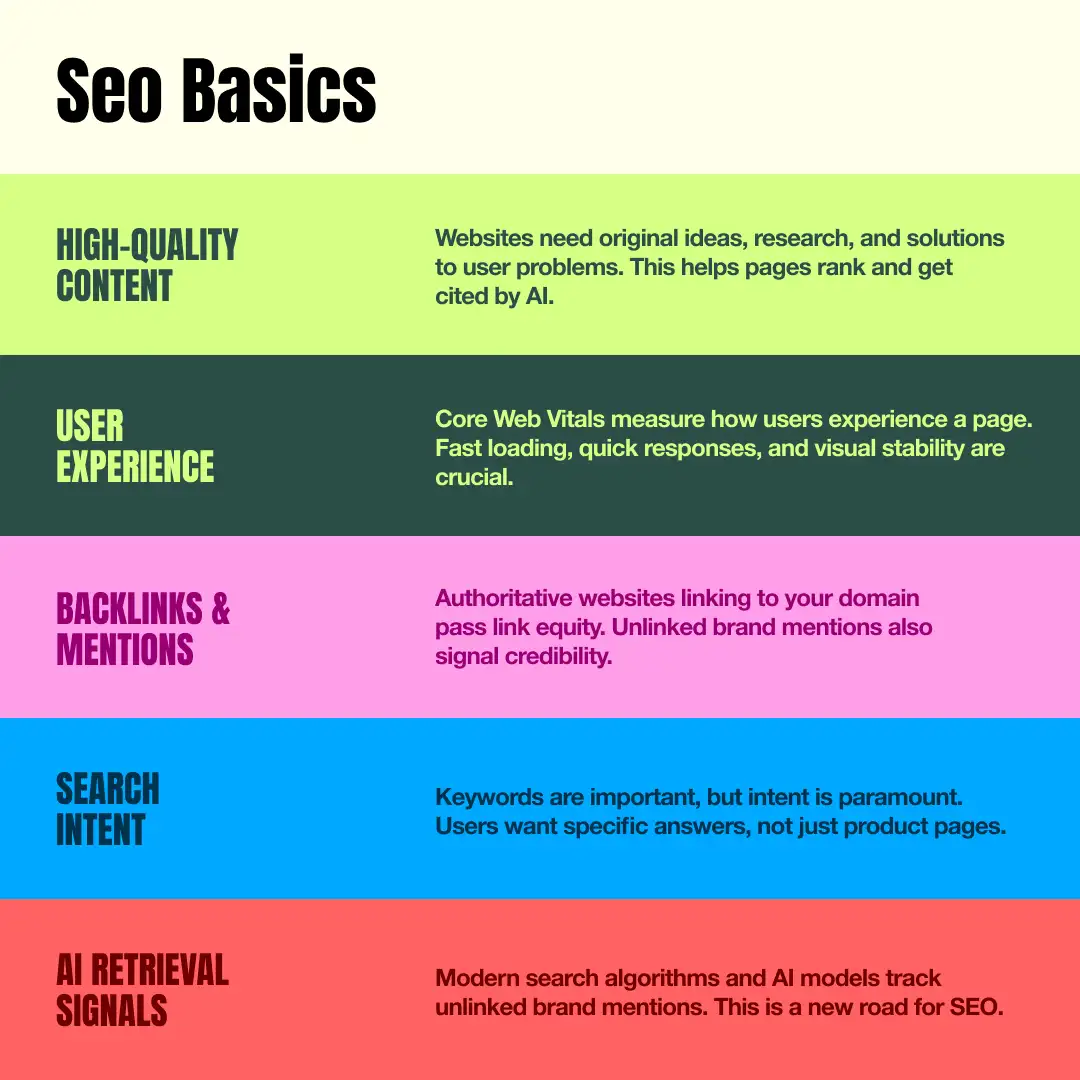
Search Intent & Keywords (The Compass)
While keywords are important, their intent stands at the top of the podium. When it comes to your product landing page, a user who searches for “best CRM software” doesn’t want to find your product page. They would much rather get a listicle comparing the possibilities.
This principle doesn’t change for AI. Generative engines are, if anything, even more intent-sensitive, because they’re trying to synthesize a single best answer rather than hand back ten options.
High-Quality, Human-First Content (The Vehicle)
Search engines do not rank websites; they rank web pages. What’s written on those pages needs to offer special value. In the eyes of a search engine or an LLM, you need original ideas, proprietary research, EEAT elements, and first-hand solutions to user problems. The same qualities that make a page rank on SERP help it get cited in an AI-generated summary.
User Experience & Core Web Vitals (The Environment)
A great article on a site that takes seven seconds to load on an iPhone is a dead article! Core Web Vitals are a strict standard search engines use for ranking by measuring exactly how a real human experiences your page. To stay competitive, you need to hit these specific benchmarks:
- Largest Contentful Paint (LCP): This measures how fast your main visual element loads. To keep users from bouncing and satisfy the algorithm, this needs to happen in 2.5 seconds or less.
- Interaction to Next Paint (INP): This measures how quickly the site actually responds when a user taps a button or link. The expectation here is near-instant, clocking in at 200 milliseconds or under.
- Cumulative Layout Shift (CLS): This measures visual stability. If your layout aggressively jumps around while loading (like text shifting right as a user tries to click), you will be penalized. Google expects a rock-solid visual stability score of 0.1 or less.
Backlinks & Brand Mentions (The Voice)
Search engines and LLMs operate on a foundation of trust, and they rely on external validation to measure it. When a highly authoritative, relevant website links back to your domain, it passes link equity directly to your site. This is nothing but a verifiable digital endorsement that tells the algorithm your content is credible enough for an industry leader to actually cite as a source.
But this ecosystem goes beyond active hyperlinks. Modern search algorithms and AI models (even more so) also track unlinked brand mentions across the web.
AI Retrieval Signals (The New Road)
This is the piece that any modern AI SEO guide has to add to the basics. AI models don’t “rank” pages the way search engines do; they retrieve and synthesize. That means clean structure, direct answers, consensus across the web, and crawlable pages matter just as much as traditional ranking factors (sometimes more).
How Search Engines and AI Models Actually Work: The Mechanics
To maneuver the machine, you have to know how the machine operates. For traditional search, the process always follows three steps. For AI engines, a fourth step gets layered on top.
Crawling (Discovery)
Search engines do not know your site exists without you telling them to. It uses automated bots (called spiders) to explore the internet. They discover your site when they click on links from other sites or when they read your XML sitemap submitted via Search Console.
AI companies also run their own crawlers like the ChatGPT-User bot or Google’s AI-focused crawlers. They follow the same basic discovery logic: if your site can’t be found, it can’t be indexed, ranked, or cited.
Indexing (Organization)
After crawling, the bot attempts to comprehend the page’s content. It renders the HTML, analyzes the CSS and JavaScript, and records this information in a giant database called the index.
Mathematically, if your page isn’t in the index, it cannot be ranked. AI systems that use retrieval-augmented generation work similarly. They maintain their own indexes or lean on live search results, and a page that’s invisible to indexing is invisible to citation too.
Ranking (Retrieval)
Search engines check their index for the best answers to the query as the user types it. It processes those pages through a series of algorithms (relevance, authority, freshness, and user experience) and delivers them in a fraction of a second.
Search engines like Google have a long history of sweeping changes to their ranking systems to keep an even playing field. It keeps SEO professionals and marketers on their toes, pushing them to think outside the box.
“What is true for ranking today could be wrong in two weeks. Google is known for experimenting—these changes happen a lot.”
Gary Illyes, Webmaster Trends Analyst at Google
Synthesis (The AI Layer)
This is the newest link in the chain, and the reason any modern guide to SEO has to talk about it directly. Once an AI model has retrieved its sources, it decides which facts to pull, which sources to name, and how to phrase the answer. This decision leans heavily on how easy your content is to extract cleanly.

Want to Get Found Where it Matters?
Leverage our expert capabilities and stay ahead in the visibility race.
The 6 Core Types of SEO
SEO isn’t just one job. It’s a massive umbrella covering six distinct disciplines, and each one now carries an AI-visibility dimension on top of its traditional job description.
On-Page SEO
On-page SEO is exactly what it sounds like: optimizing the elements directly on your website that you have total control over. It’s about making sure both human readers, search engine bots, and AI crawlers understand exactly what value your page provides.
-
Keyword Placement & Intent Matching
Map your primary keyword to the URL, H1, and first 100 words — then satisfy intent first (compare vs. buy vs. learn) before worrying about keyword count.
-
Semantic SEO & NLP
Use related entities and terms (e.g., “midsole,” “heel drop” for running shoes), not just exact-match keywords, to prove topical depth to Google’s NLP. This same semantic richness is exactly what AI models scan for when deciding whether a page actually understands a topic or is just skimming the surface for keyword coverage.
-
Human-First, E-E-A-T Content
Original insights beat rehashed competitor content. Inject E-E-A-T into your content with detailed author bios, cited sources, and explicit statements of firsthand experience. This is the signal search engines and AI models both use to decide who to trust.
“And let’s be honest—most of that SEO content is just digital mulch. (…) If your blog exists solely to rank, it’s living on borrowed time.”
John Mueller, Search Advocate at Google
-
Structuring for AI & LLM Citations
It turns out LLMs look for very different signals from traditional search crawlers. You can have incredible domain authority and still get ignored by AI engines. The fix is to lead with the answer, not the backstory. Use tables, bullets, and clean H2/H3s so LLMs can parse and extract your content easily.
-
Structuring for Readability and Scannability
Even if your semantic structure perfectly satisfies the algorithm, it means nothing if a human lands on your page and immediately bounces. To combat this, the text should be structured the right way:
- Keep paragraphs short (no more than three or four sentences).
- Use descriptive H2 and H3 subheadings to break up the visual flow.
- Bold the most critical insights so a fast-scrolling reader can still extract your core value proposition.
-
Metadata & CTR Optimization

Your meta title tag and meta description serve as your billboard on the search results page. If they read like a robotic list of keywords, you won’t get the click. You need metadata that acts as compelling ad copy.
Weak: Best CRM Software 2026
Strong: The 7 Best CRM Software Platforms (Tested & Ranked for 2026)
-
Internal Linking Architecture
This is heavily underutilized. Every time you publish a new cluster article, you need to include a link back to your main pillar page. This passes “link equity” around your site and keeps users clicking through your ecosystem rather than bouncing back to the search results.
-
Image & Media SEO
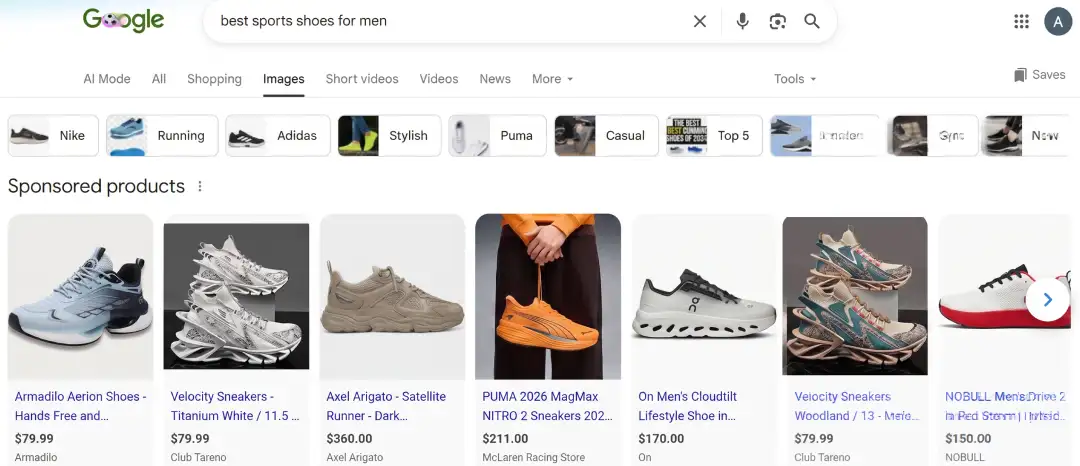
Search bots cannot “see” your custom infographics or interface screenshots. You have to tell them what the image is by writing descriptive alt text. You also need to compress file sizes, since massive image files are a silent killer of page load speed.
Off-Page SEO
Off-page SEO is everything that happens off your domain. It’s strictly about building your site’s reputation and authority. Search engines and AI models view links and mentions from other websites as votes of confidence.
-
Strategic Link Building
You can’t just buy links from a random vendor. You have to earn them. According to a study by Ahrefs analyzing over 1 billion web pages, 90.63% of all pages get absolutely zero organic search traffic from Google, and a massive reason is a complete lack of backlinks. Tactics like guest posting on authoritative industry blogs are standard practice.
“Link building will always be a fundamental aspect of SEO.”
Eric Enge, Co-Author of The Art of SEO and Principal at Stone Temple
-
Link-Magnet Content
If you want other websites to link to you organically, you have to give them a reason. Thin posts don’t attract links. Comprehensive, long-form content becomes the definitive source that other sites cite. It is also the exact format AI models prefer to pull from when they need a detailed, well-sourced answer.
-
Digital PR & Reactive Outreach
This is where the pros play. By creating proprietary data reports, you can pitch expert insights to journalists. If they use your data, you score a high-authority backlink from a major publication. That citation trail is exactly what tends to get picked up and repeated inside AI-generated summaries, too.
-
Unlinked Brand Mentions
Not every mention includes a link. One of the easiest, highest-converting ways to build authority is to claim what’s already yours. Marketers and AI models here track brand mentions with alerts and follow-up.
Technical SEO
This is the system that supports the backend. The most well-written, well-researched, and perfectly human-sounding content in the world can get you a visitor, but if you aren’t technically solid, search engines and AI crawlers will hit a brick wall and leave.
-
Crawlability & Indexability
With your XML sitemap, bots can use it as a map to find web pages. Any page accidentally blocked by your robots.txt file, or looping through a broken redirect, gets ignored by the bot. To sidestep this, SEO experts regularly check for pages that aren’t being indexed and pages that are throwing errors.
-
Unblocking AI Crawlers
This is the most common technical disaster right now, and it belongs squarely in the technical SEO conversation. Many sites accidentally block AI bots (like the ChatGPT-User agent) without realizing it because server firewalls block unfamiliar bots by default to save bandwidth. If the bot can’t crawl you, it mathematically cannot cite you, no matter how good your content is.
-
Site Architecture & Canonicals
Duplicate content can be a huge problem if you’re dealing with large sites with several categories or directories. By defining canonical tags, you can let Google know which variation of a page is the “master” page, avoiding cannibalization of your own rankings. Clean architecture also makes it far easier for an AI crawler to figure out which version of a page is authoritative.
-
Schema Markup (Structured Data)
This is literal code you add to your site to spoon-feed context to search engines. Adding FAQ schema or Software Application schema can change how your listing looks on the SERP, granting you “rich snippets” that boost your click-through rate. Structured data is also one of the clearest signals you can hand an AI model. It removes the ambiguity of parsing prose and gives the model clean, labeled facts to pull from directly.
Local SEO
If you run a brick-and-mortar business, this is your bread and butter. Local SEO focuses on optimizing your Google Business Profile, managing local citations (Name, Address, Phone number consistency across the web), and ranking for “near me” queries.
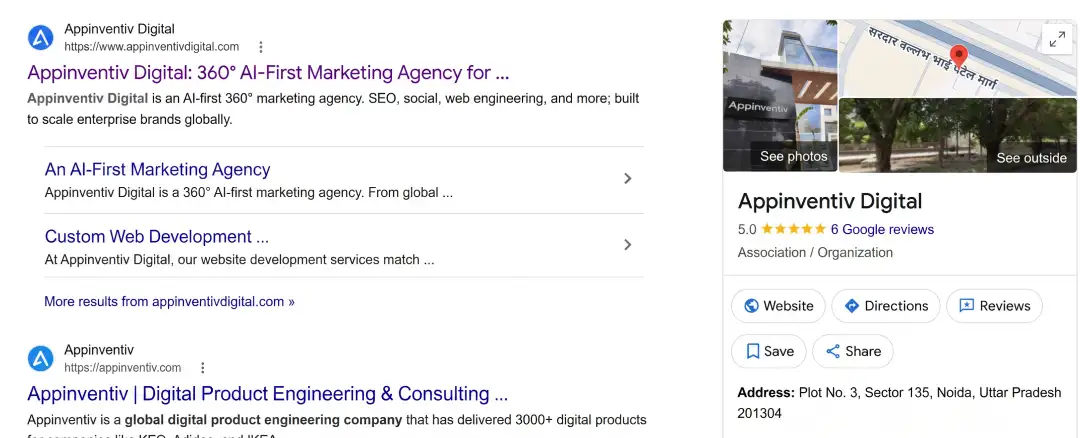
Your profile needs complete, accurate categories, updated hours, and a steady stream of fresh photos and posts. Incomplete profiles are one of the fastest ways to lose local visibility to a competitor with a detailed listing.
-
Citation Consistency (NAP)
Every directory listing needs to match Name, Address, and Phone number exactly. Inconsistencies confuse both search engines’ local algorithms and any AI assistant trying to confirm your business details before recommending you.
-
Reviews as a Trust and AI Signal
Local ranking is influenced by the volume, recency, and response rate. If an AI assistant is asked, “What’s the best [service] near me?” and the answer includes a business that has positive reviews on Google, Yelp and industry-specific platforms, that business is more likely to be recommended.
-
Local Content & Location Pages
Having multiple location pages with actual local information (not copied and pasted pages) can boost your website’s ranking for geo-specific queries. It also provides AI models with the local information they need to draw from.
Ecommerce SEO
Ecommerce SEO involves managing massive product catalogs, optimizing faceted navigation, and writing category page descriptions that actually rank.
-
Faceted Navigation & Duplicate Content
If you’re not careful, you can create thousands of near-duplicate URLs on those “filter by color” or “filter by size” pages. Controlled indexing rules and canonical tags help prevent your own authority from spreading throughout a hundred pages.
-
Product Page Optimization
The product pages rank well when they have unique descriptions (not ones that have been copied from the manufacturer), clear specifications, and genuine customer reviews. Optimization also provides a sufficient amount of specificity for an AI shopping assistant to accurately describe and recommend the product.
-
Category Page Depth
Thin category pages that are just a grid of products rarely rank well. Adding genuine buying-guide content at the top of a category page turns a purely transactional page into something both Search engines and an AI model can treat as a useful resource.
-
Product Schema & Structured Data
For ecommerce, price, availability and review-rating schema markup are things that are non-negotiable. They create rich results in the SERP and provide structured facts for AI shopping tools to quote from rather than get from unstructured page content.
International SEO
Scaling across borders requires a specialized setup. This involves hreflang tags to tell Google which language version of a page to serve to which country, along with genuinely localized content strategies.
-
Hreflang Implementation
Hreflang tags need to be implemented correctly across every regional version of a page, or you risk Google (and AI crawlers) serving the wrong language or region to a user, which tanks both engagement and trust signals.
-
True Localization vs. Translation
Machine-translated content rarely satisfies E-E-A-T in a new market, and it performs just as poorly with AI models trained to detect low-effort, generic phrasing. Genuine localization is what separates a market that actually converts from one that just technically exists.
-
Regional Authority Building
Backlinks and brand mentions need to be earned within each target market, not just globally. A page ranking well in the US doesn’t automatically carry authority in the UK or India. Regional off-page work has to happen market by market.
-
Multilingual Site Architecture
Translating your homepage isn’t the same as building a multilingual site. You need a proper language switcher, fully translated navigation and metadata (not just body copy), and text that isn’t hardcoded into images. Bots and AI crawlers need to parse every language version cleanly, not just the one you built first.
-
Region-Wise Keyword Research
The same product gets searched for differently depending on where you are, so don’t just translate your keyword list, research it fresh per market. Search volume, phrasing, and even intent shift by region (“trainers” vs. “sneakers” is the classic example, but pricing terms, slang, and category names shift just as often).
White Hat vs. Black Hat SEO: Playing the Long Game vs. Playing with Fire
SEO strategy falls into one of two buckets. White hat SEO follows search engine spam policies to build sustainable, compounding traffic over time. Black hat SEO exploits algorithmic loopholes for quick wins, risking a permanent ban when the engine inevitably catches on.
| Feature | White Hat SEO | Black Hat SEO |
| Primary Focus | The human reader | The search engine algorithm |
| Core Tactics | Quality content, digital PR, site speed | PBNs, cloaking, keyword stuffing |
| Risk Profile | Zero to low risk | Extreme risk of de-indexing |
| Timeline for Results | 3 to 6+ months | Days to weeks (until penalized) |
| Long-Term Value | Compounds year over year | Crashes at the next algorithm update |
White Hat SEO (The Sustainable Path)
This is the benchmark of the best. Here you play strictly by the rules, offering the best possible answer to a person entering a query, and, by extension, the best possible source for an AI model to cite.
Backlinks are editorially earned via digital PR and outreach, not paid for. The catch is patience. White hat methods can take months to show results, but the payoff snowballs, making your site extremely robust against algorithm changes.
Black Hat SEO (The Fast Track to a Penalty)
This is where the sketchy tactics live. Here you exploit algorithm loopholes while ignoring actual user experience. Techniques include:
- Keyword stuffing (filling pages with hidden text)
- Cloaking (showing different content to bots than to visitors)
- Scraping competitor content
- Buying huge quantities of bad links from Private Blog Networks (PBNs)
These tricks might give you a short-term traffic spike, but Google’s spam updates are brutal and sophisticated. When the algorithm catches you (and it will), your site gets hit with a manual penalty, your pages get vaporized from the index, and recovery is nearly impossible.
The Murky Middle: Grey Hat SEO
You’ll inevitably hear professionals talk about “grey hat” tactics, the ambiguous middle ground where marketers push the boundaries of guidelines without blatantly breaking them.
Buying an expired domain to redirect its residual authority, or paying “editorial fees” for a guest post, are common examples. It’s highly prevalent in the industry but still carries moderate risk.
AI Has Already Moved Into the Workflow
AI isn’t just something search engines run on. It’s something SEO teams run on. The whole discipline has quietly rebuilt itself around AI tooling at almost every stage:
Audits run on AI first:
Instead of a human manually combing through a codebase, teams now point diagnostic AI tools to scan crawl budgets, parse server log files, and flag indexation bottlenecks. What used to take weeks of manual crawling now takes days.
Competitor research is AI-assisted too:
Rather than guessing why rivals win, teams can use AI to reverse-engineer the exact data structures and citations that trigger those rankings. Armed with that data, you can quickly close the competitive gap.
LLMO shapes the data, not just the writing:
This is less about rewriting copy and more about formatting product data, schema, and corporate content so ChatGPT, Claude, and Gemini can actually retrieve and cite it correctly. Clean, structured data beats clever phrasing every time.
AEO reshapes content into direct answers:
High-intent informational pages get restructured into clear Q&A blocks, aimed squarely at winning position-zero snippets and AI answer cards instead of just ranking somewhere on page one.
Voice search rides the same rails:
Since smart assistants and AI chat interfaces both favor natural, conversational phrasing over typed keywords, optimizing for one increasingly optimizes for the other.
What’s Actually Changed, and What Hasn’t
The fundamentals of basic SEO knowledge haven’t changed. What’s changed is the surface area. A page now has to satisfy a human reader, a traditional crawler, and a retrieval system deciding whether to quote you in a synthesized answer. That’s why cross-engine monitoring, not just a Google Search Console check, has become table stakes.
One thing worth flagging for anyone building an AI SEO guide for beginners: Google’s own guidance explicitly waves off a few tactics that get oversold as essential (llms.txt files, chopping content into “AI-sized” chunks, and manufacturing fake brand mentions).
The investment still belongs where it always has: content quality, technical health, and real authority. AI changed how fast you can build those things. It didn’t change what they are.
Why Does A Robust SEO Work Well For Your Business?
A robust SEO strategy moves beyond basic traffic, delivering compounding ROI, lowering acquisition costs, and building a sustainable competitive moat.
Compound ROI Wins Over Paid Advertising
When you turn off a Google Ads campaign, your traffic flatlines the very same second. Organic search, however, compounds. A well-optimized pillar page published today might take three months to rank, but once it does, it can pull in thousands of qualified visitors and AI citations for years without costing you another dime per click.
Lowering Customer Acquisition Cost (CAC)
As more people bid on the same keywords, paid acquisition costs are continually increasing. Organic traffic is a huge offset to your blended marketing spend. The more organic traffic (and AI traffic) you can attract, the more your overall CAC will decrease as time goes on.
Building Brand Trust and Authority
Consumers are smart. They understand what the “Sponsored” tag is, and many will ignore it. Organically ranking, or being the origin of an AI model, indicates that the algorithm has a high level of confidence in this brand: enough to show it to the user. That trust is very directly converted to closed deals.
Fueling the Entire Marketing Funnel
Though most marketing channels are siloed, they all rely on SEO as their backbone. At the top of the funnel, it’s aimed at buyers who are at the start of their problem-solving process. Evaluators are held by mid-funnel comparison pages (Software A vs. Software B). The bottom-funnel transactional pages convert the sale-matching intent and keep the searcher at the same funnel without a cold-calling salesperson.
Tapping into Data-Driven Customer Insights
Some of the most detailed and accurate market research on the planet is SEO. Search Consoles can give you insights into not only your rankings, but also what your customers are typing into their keyboards.
When you see a huge amount of traffic about a particular feature or pain point in the market, push that information directly into product and sales before your competitors know it’s happening.
Proven SEO Strategies for Growing Businesses
These are the actual frameworks top-tier agencies run for companies looking to scale, not just survive an algorithm update. Each one is a repeatable system, not a one-off trick.
Topic Clusters and Pillar Pages
Rather than having random blogs published, organize your site as a library. Build a large, comprehensive “Pillar Page” (the one you’re reading right now is a Pillar Page, for instance). Next, create dozens of smaller ‘Cluster’ articles that explore specific subtopics and tie them all together to the pillar page.
This results in a topical map that conveys a strong signal to search engines and provides an AI model with a pure, rich source of material from which to draw on any subtopic.
Content Pruning and Refreshing
You don’t always need to publish new content. Often, the fastest ROI comes from updating old, decaying pages. Go back to articles you published two years ago, update the stats, add new insights, improve the formatting, and change the publish date.
The Skyscraper Technique, Rebuilt for AI Citations
The classic version was simple: find the top-ranking page for your target keyword, build something noticeably better, then pitch it to everyone linking to the original. That still works, but it needs an update for this era. “Better” now also has to mean more extractable via sharper data, cleaner tables and a direct answer up top.
Programmatic SEO for Scale
If you are running an ecommerce catalog, a SaaS directory, or any site with a repeatable page pattern, manual content creation simply cannot keep up. Templated pages built from structured data step in to capture that massive long-tail search volume.
Establishing Analytics to Prove ROI and Diagnose Drops
If you can’t prove your strategy is working, leadership will inevitably pull your budget. Before publishing anything, lock down your analytics foundation. Since organic growth takes time, measure leading indicators first:
- Impression spikes
- Keyword movement
- Brand citations inside AI Overviews
As that momentum builds, your lagging indicators will follow. If traffic suddenly dips, use this data to diagnose the root cause before making panicked, reactive changes.
Essential SEO Tools: The Modern Tech Stack (Including AI Tools)
You can’t do this job manually. Here’s the software stack professionals use to execute.
| Category | Top Tools | Primary Use Case |
| Foundational Data | Google Search Console, GA4 | First-party data on indexing, clicks, and user journeys |
| All-in-One Suites | Ahrefs, Semrush | Competitor gap analysis, backlink audits, keyword tracking |
| Technical Crawlers | Screaming Frog, Sitebulb | Simulating search bots for infrastructure audits and redirect mapping |
| Content Optimization | SurferSEO, Clearscope | Grading topical coverage and semantic entity inclusion |
| AI & Brand Monitoring | Google Alerts, Mention, AI-visibility trackers | Tracking unlinked brand mentions and AI Overview/chatbot citations |
The Pocket Burn of SEO: Dedicated Pricing Breakdown
Professional SEO services are not a one-size-fits-all commodity. Because organic and AI visibility require a dynamic combination of technical engineering, high-level copy strategy, data analytics, and digital PR, pricing scales dynamically.
To budget accurately, here’s the typical cost range across four distinct lenses.
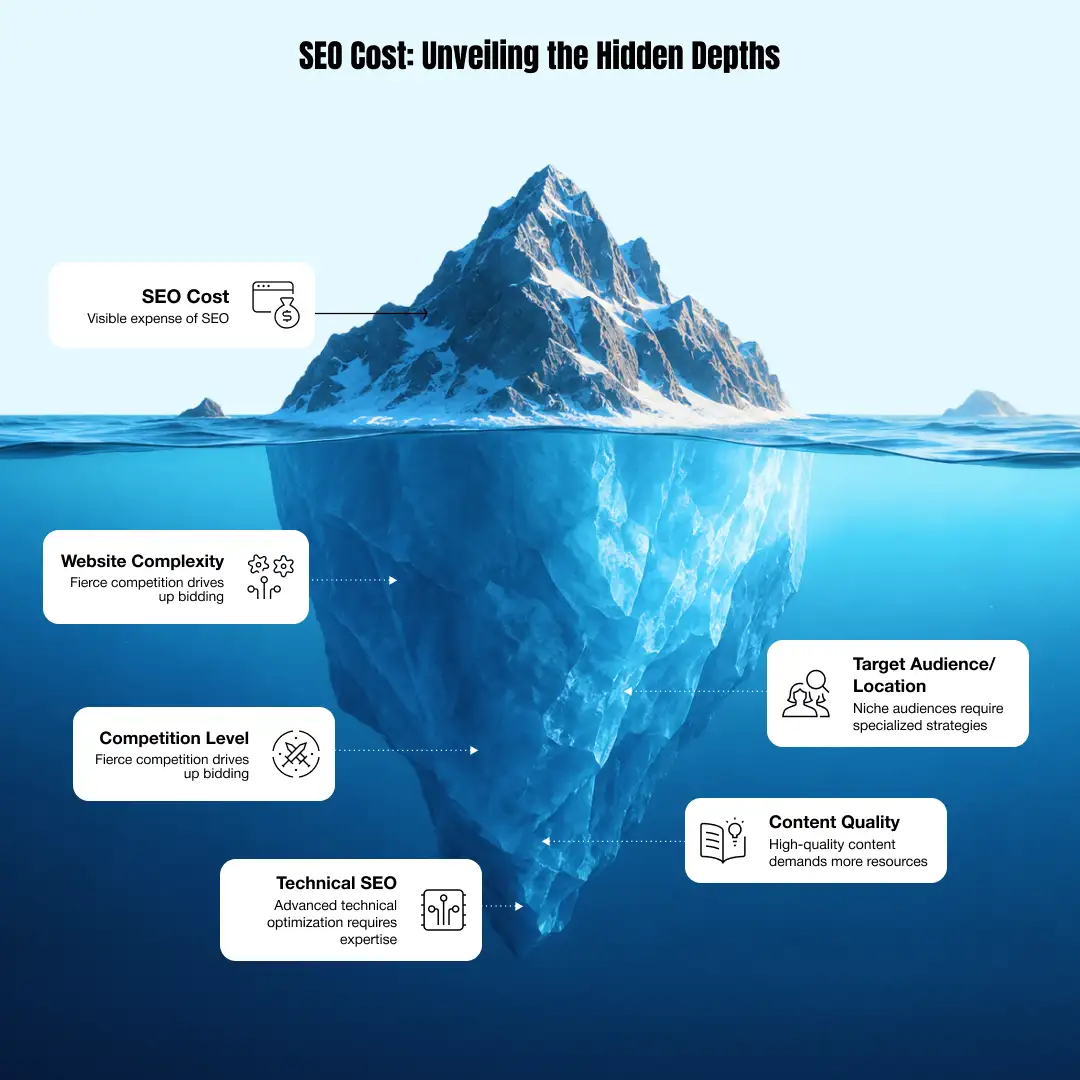
- Cost Based on Strategy Complexity
| Complexity Level | Average Monthly Retainer (USD) | Key Strategic Focus |
| Low Complexity | $1,500 – $2,500 | Low-competition niches, basic keyword targeting, simple local visibility |
| Medium Complexity | $3,000 – $6,500 | Moderately competitive B2B/B2C spaces, Core Web Vitals, topical cluster mapping |
| High Complexity | $7,000 – $15,000 | High-density niches (Finance, Crypto, Legal), deep technical audits, entity schema mapping |
| Hyper-Competitive | $20,000+ | Enterprise-grade global tech markets, programmatic SEO, multinational architectures |
- Cost Based on the Range of SEO Services
| Service Model | Price Range (USD) | What You Get |
| One-Time Technical Audit | $2,500 – $10,000 (Flat Fee) | Complete site crawl, crawl budget analysis, redirect mapping and actionable fix list |
| Content-Only SEO Optimization | $2,000 – $5,000 / month | Briefing, semantic keyword research, writing and metadata refreshes |
| Authority-Only Link Building | $3,000 – $7,000 / month | Digital PR campaigns, infographics and editorial outreach |
| Full-Service SEO & AI Visibility Retainer | $4,500 – $15,000+ / month | End-to-end technical execution, content hubs, link acquisition, AI citation tracking |

Solve SEO Red Flags With a Budget That Works For You!
We’ll identify all the SEO hiccups with our 360° website Audit and give you a solution plan as per your costing.
- Cost Based on Company Size and Scale
| Company Size | Average Investment Range (USD) | Operational Scope |
| Startup / Small Business | $1,500 – $3,500 / month | Local intent ranking, low-hanging technical fixes, and long-tail traffic |
| Mid-Market Enterprise | $4,000 – $9,000 / month | Regional expansion, aggressive cluster creation and competitive defense |
| Large-Scale Enterprise | $10,000 – $25,000 / month | Multi-subdomain architectures, data scaling and continuous technical monitoring |
| Global Fortune 500 | $30,000+ / month | Complex multi-language setups, large-scale digital PR, brand control at scale |
- Cost Based on Agency Location
| Agency Location | Average Hourly Rate / Retainer Baseline |
| Tier 1 Tech Hubs (NYC, London, SF) | $150 – $300+ / hr | $7,500 baseline |
| Tier 2 Markets (Midwest US, Southern/Eastern Europe) | $100 – $150 / hr | $4,000 baseline |
| Offshore / Nearshore Scaled Hubs (India, Southeast Asia) | $30 – $75 / hr | $1,500 baseline |
In-House vs. SEO Agency: Which One to Go For?
Eventually, every growing brand faces a familiar crossroads: do we build an internal SEO team, or partner with a specialized agency? An in-house team brings incredible value, offering deep, full-time dedication and immediate access to your internal product experts.
If you want absolute brand alignment and fast internal communication, having your own talent is fantastic. But as search becomes more complex, scaling that internal team gets tricky. Covering every necessary base today requires a full roster of specialists. Funding those salaries, alongside premium enterprise SEO tools, demands a massive ongoing budget.
This is exactly why many enterprise brands, even those with brilliant internal marketing leads, lean heavily on SEO marketing agencies. Rather than replacing your team, a good agency acts as an execution powerhouse.
You instantly plug into their seasoned talent, established publisher networks, and tested workflows without the hiring bottleneck. Whether they are acting as an extension of your current marketing department or handling the entire operation from scratch, an agency gives you a specialized, scalable task force for roughly the cost of a single mid-level hire.

Brand Visibility is a Non-negotiable, Let Experts Handle It
Appinventiv Digital helps companies stay ahead and connect with the audience that impacts your brand.
The Ultimate SEO & AI Visibility Execution Checklist
Ready to get to work? Follow this procedural workflow to get your campaign off the ground.
- Run a Technical Audit: Establish the foundation. Check Core Web Vitals, fix broken 404s, verify your XML sitemap submits cleanly in Search Console, and confirm your robots.txt isn’t accidentally blocking AI crawlers.
- Map the Keyword & Content Strategy: Align with search intent. Identify primary topics, map cluster pages, and decide whether the intent demands an informational guide or a transactional landing page.
- Execute Content Optimization: Optimize for E-E-A-T and answer-first structure. Draft content with clear H2/H3 headings, embed semantic entities naturally, include proprietary data, and format everything for maximum scannability by both humans and AI parsers.
- Finalize On-Page Elements: Nail the metadata. Write CTR-focused title tags, keep URL slugs short and descriptive, compress images, and secure internal linking paths back to your pillar pages.
- Launch Link Building & Digital PR: Earn the endorsements. Distribute content via social channels, pitch unique data points to industry publishers, and track backlink acquisition over the coming months.
- Monitor AI Visibility: Set up brand-mention alerts and periodically check whether AI Overviews, ChatGPT, and Perplexity are citing your content for your target queries, then feed those insights back into your content strategy.
Sail With Appinventiv Digital and Cross the SEO Sea
If you want to survive the zero-click, AI-first era and actually pull qualified leads, you need a partner who understands where search is going, not just where it has been.
Appinventiv Digital has spent years mastering the AI-infused digital marketing space. Having partnered with over 100 brands, we build sustainable, high-converting digital ecosystems. We know exactly how to structure your site to dominate traditional algorithms while capturing massive visibility in AI Overviews and generative engine environments.
Brands partnering with Appinventiv Digital see a 250% increase in citations across generative engines, ensuring they remain visible even when users don’t click traditional links. Additionally, by fixing technical debt and optimizing crawl budgets, clients experience a 3.5x faster time from crawl to live index.
Conclusion
The space of organic search is undeniably shifting. AI is eating up simple queries, and the technical barrier to entry is higher than it was a decade ago. But the core philosophy remains completely unchanged. Figure out what people are desperately trying to solve, and build the absolute best resource on the internet to solve it.
Whether you’re someone working through your first SEO guide for beginners or a seasoned marketer refining an existing program, the fundamentals of search and the mechanics of AI visibility now have to be built together, not bolted on as an afterthought.
SEO is not a sprint; it’s a compounding marathon. The work you put in today builds digital equity across search engines and AI engines alike.